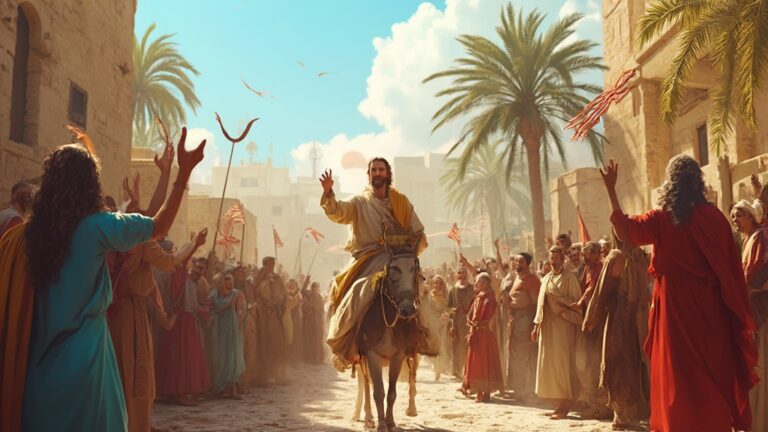
The Great Attraction

Study Guide for “The Great Attraction” Sermon

Introduction

In this powerful sermon, C.H. Spurgeon explores the profound truth found in John 12:32, where Jesus declares that His crucifixion will draw all men to Him. Spurgeon emphasizes that what appeared to be a tragic event—the death of Christ—was, in fact, the ultimate act of love and the greatest source of attraction for humanity. He discusses how the cross serves as a counter-attraction to the evils of the world, drawing people from despair to hope, fear to faith, and sin to obedience.

Discussion Questions

  1. Understanding the Cross: How does Spurgeon describe the significance of the crucifixion in drawing people to Christ? In what ways does this challenge or affirm your understanding of the cross?

  2. Personal Reflection: Reflect on a time when you felt drawn to Christ. What aspects of His love or sacrifice were most compelling to you during that experience?

  3. The Nature of Attraction: Spurgeon mentions that the drawing power of Christ is gentle and gracious. How does this understanding of Christ’s approach influence your view of evangelism and sharing the gospel with others?

  4. Counter-Attraction: In what ways do you see the “whirlpool of evil” in today’s society? How can the message of the cross serve as a counter-attraction in your community?

  5. Hope and Faith: Spurgeon states that the cross draws people from despair to hope and from fear to faith. How can you apply this truth in your own life or in the lives of those around you who may be struggling with despair or fear?

  6. The Role of the Holy Spirit: How does the Holy Spirit play a role in the drawing process described by Spurgeon? What does this mean for your personal relationship with God?

  7. Application of the Message: What practical steps can you take this week to focus on the cross of Christ in your daily life? How can you ensure that your actions and words reflect the love and sacrifice of Jesus?

Prayer

Heavenly Father, thank You for the incredible love demonstrated through the crucifixion of Your Son, Jesus Christ. Help me to understand the depth of this sacrifice and the power it holds to draw me closer to You. May I be sensitive to the gentle and gracious drawing of the Holy Spirit in my life. As I reflect on the cross, let it transform my heart and guide my actions, so that I may share this message of hope and love with others. Draw me nearer to You, Lord, and help me to be a vessel of Your grace in the world. In Jesus’ name, I pray. Amen.

Similar Posts

  • Alive or Dead — Which?

    In this sermon, C.H. Spurgeon explores the profound truth found in 1 John 5:12: “He that has the Son has life; and he that has not the Son of God has not life.” Spurgeon emphasizes the importance of possessing faith in Jesus Christ as the source of spiritual and eternal life. He contrasts the living, who have received Christ and exhibit the fruits of faith, with the spiritually dead, who remain in condemnation due to their unbelief. The sermon encourages believers to reflect on their relationship with Christ and to actively engage in sharing the gospel with those who are spiritually dead.

  • The Importunate Widow

    In this sermon, C.H. Spurgeon explores the parable of the importunate widow from Luke 18:1-8, emphasizing the importance of persistent prayer. He contrasts the unjust judge, who eventually grants the widow’s request out of annoyance, with God, who is loving and eager to respond to the prayers of His people. Spurgeon encourages believers to pray continually, with fervor and faith, trusting in God’s goodness and willingness to answer.

  • The Triumphal Entry into Jerusalem

    In this sermon, Rev. C. H. Spurgeon reflects on the significance of Christ’s triumphal entry into Jerusalem, as described in Matthew 21:5. He emphasizes that while the people expected a political king to deliver them from Roman oppression, Jesus came as a humble spiritual king, fulfilling prophecy and demonstrating the nature of His kingdom. Spurgeon explores the implications of Christ’s kingship, the characteristics of His kingdom, and the responses of the people, urging listeners to recognize the true nature of Christ’s reign and their place within it.

  • The Axe at the Root—A Testimony Against Puseyite Idolatry

    In this sermon, C.H. Spurgeon emphasizes the importance of true worship, which is to be conducted in spirit and in truth, as taught by Jesus in John 4:23-24. Spurgeon critiques the reliance on outward forms and rituals in worship, arguing that genuine worship must come from the heart and be a response to God’s grace. He outlines the historical evolution of worship, the challenges of spiritual worship, and the necessity of worshiping God as a Spirit.

  • The Waterer Watered

    In this sermon, C.H. Spurgeon explores the profound truth found in Proverbs 11:25, “He that watereth shall be watered also himself.” Spurgeon emphasizes the importance of living for the good of others, illustrating how our actions towards others ultimately benefit ourselves. He draws on natural analogies to demonstrate that mutual support and generosity are essential for spiritual growth and fulfillment. The sermon encourages believers to actively engage in serving and uplifting one another, assuring them that in doing so, they will also receive blessings in return.

  • Hope, Yet No Hope. No Hope, Yet Hope

    In this powerful sermon, C. H. Spurgeon explores the complexities of the human heart and the struggle between self-reliance and faith in Christ. He emphasizes that true hope cannot be found in our own efforts or righteousness, but only in the grace and mercy of God through Jesus Christ. Spurgeon encourages listeners to abandon their futile attempts at self-salvation and to embrace the hope that comes from trusting in the Savior.